Họ tên:Name:
Lớp:Class:
Ngày:Date:
Làm sao nhận ra khi AI mắc lỗi hoặc "bịa" thông tin?How can we tell when AI makes mistakes or "makes up" information?
🖼️
Lỗi hình ảnhImage Errors
AI vẽ hoặc tạo hình ảnh sai thực tế. Em nhìn là có thể thấy sai ngay (ngón tay thừa, chữ vô nghĩa...)AI draws or creates images that look wrong. You can see the mistakes right away (extra fingers, nonsense text...)
📄
Lỗi thông tinInformation Errors
AI nói hoặc viết thông tin sai. Em phải kiểm tra mới biết đúng hay sai (số liệu, sự kiện...)AI says or writes incorrect information. You must check to know if it is right or wrong (numbers, facts...)
AI vẽ áp phích động vật:AI draws an animal poster:
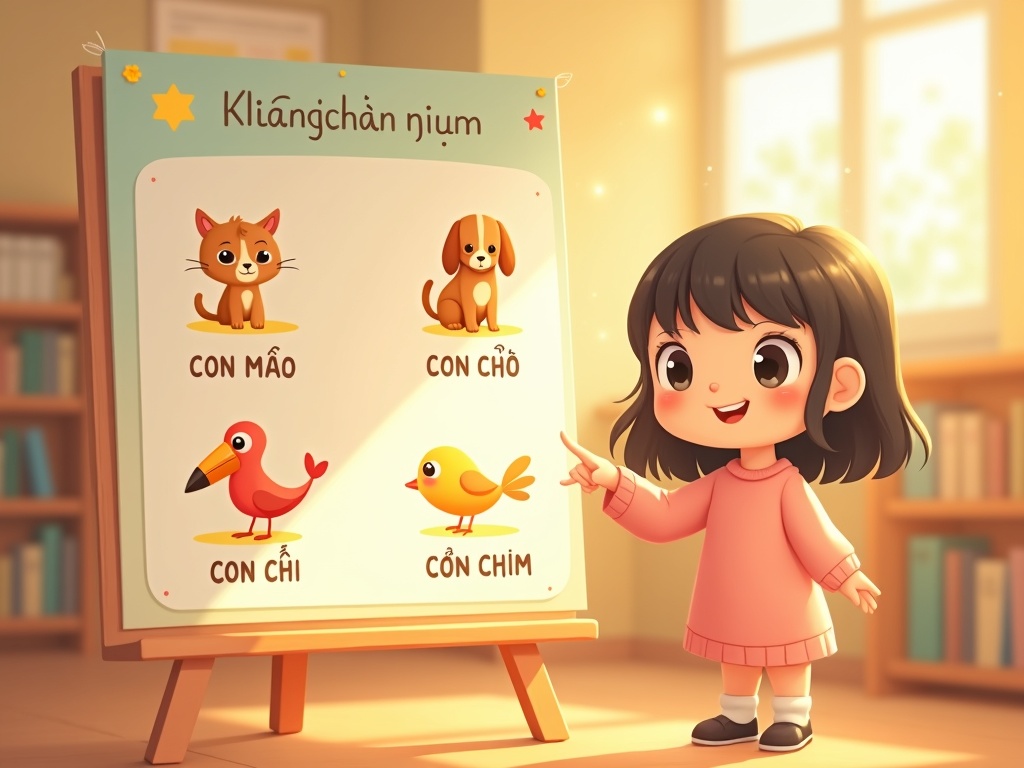
Lỗi chữ viết: "CON MAO" thay vì "CON MEO"!Spelling error: "CON MAO" instead of "CON MEO" (cat)!
AI vẽ cậu bé soi gương:AI draws a boy looking in a mirror:
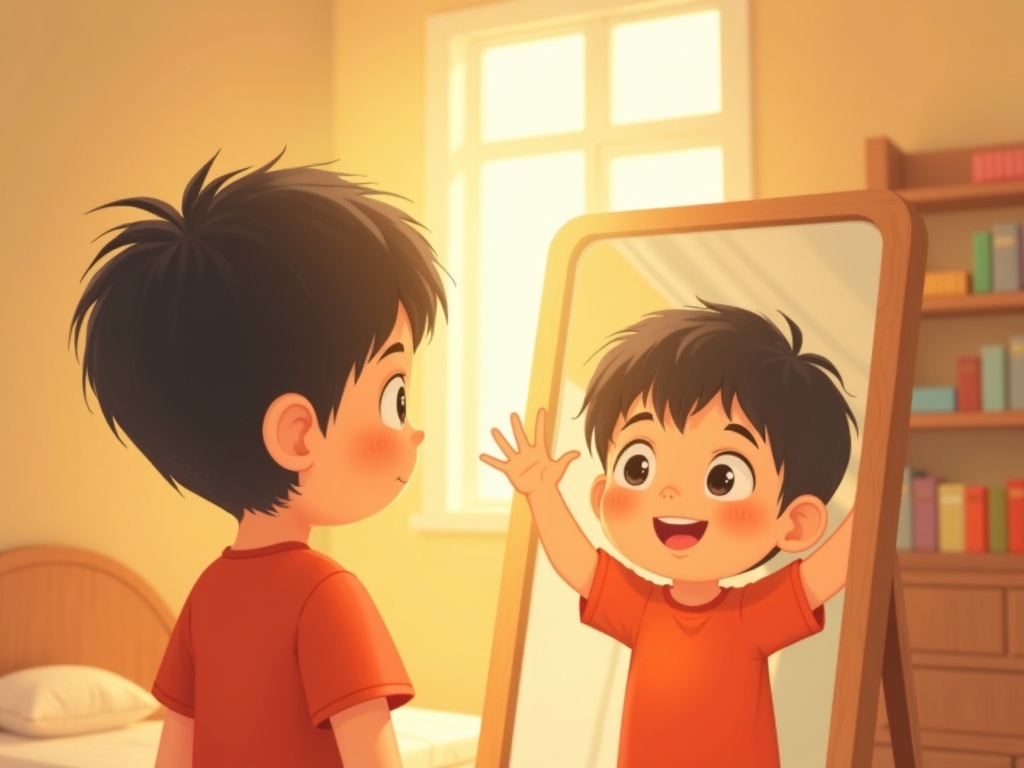
Lỗi phi thực tế: Biểu cảm khác, tay ngoài khung gương!Unrealistic error: Different expression, hand outside the mirror frame!
Google Translate dịch sai:Google Translate translates incorrectly:
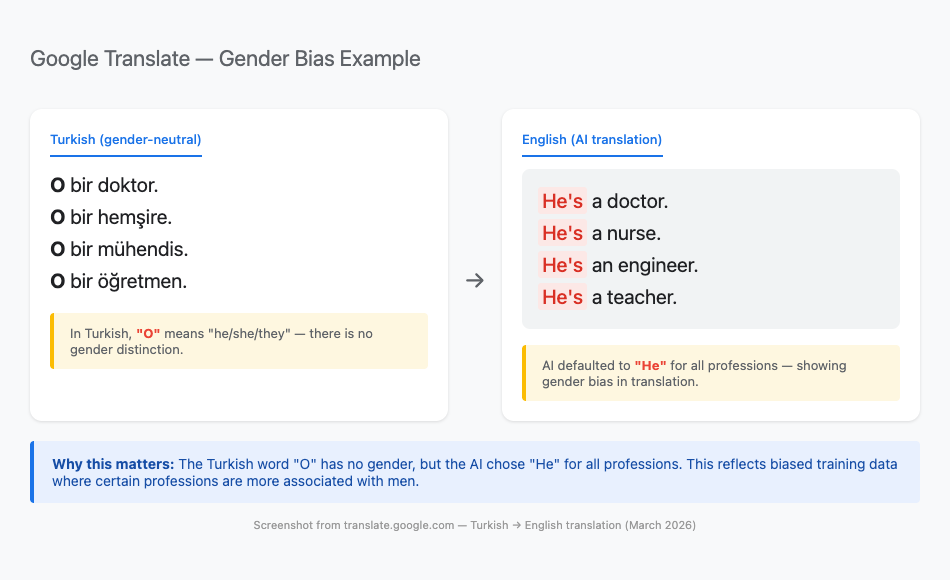
AI dịch thuật cũng mắc lỗi!AI translation also makes mistakes!
Google Lens nhận diện sai:Google Lens identifies incorrectly:
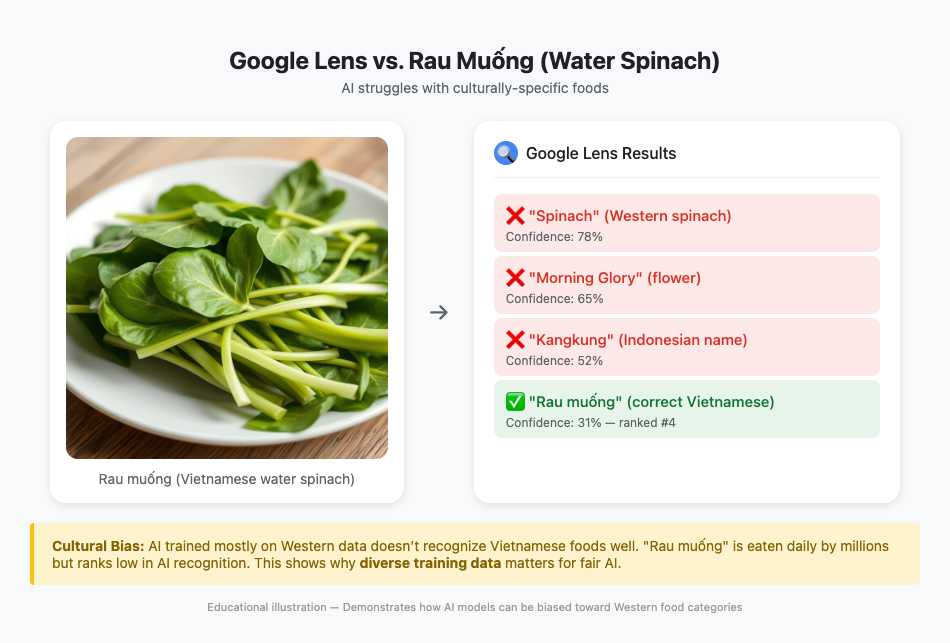
AI nhìn hình ảnh cũng có thể nhầm!AI can also mistake what it sees in images!
Từ vựng quan trọng:Key Vocabulary:
ảo giác AI = hallucination (AI bịa thông tin) 👻 |
kiểm chứng = kiểm tra lại thông tin 🔍 |
nguồn tin cậy = sách, thầy cô, trang web chính thức 📚
AI hallucination = AI makes up information that sounds real 👻 |
verify = check information again 🔍 |
reliable source = books, teachers, official websites 📚
Ảo giác AI là khi AI tự tin bịa ra thông tin nghe có vẻ rất thật, nhưng thực ra hoàn toàn không đúng.AI Hallucination is when AI confidently makes up information that sounds very real, but is actually completely wrong.
Tại sao nguy hiểm?Why is it dangerous?
- Lỗi thường: AI đưa thông tin sai hoặc cũ
- Regular errors: AI gives wrong or outdated information
- Ảo giác: AI bịa ra thứ không hề tồn tại (ví dụ: tóm tắt bài thơ chưa bao giờ được viết!)
- Hallucination: AI makes up things that don't exist at all (e.g., summarizing a poem that was never written!)
1
Hỏi lại bằng cách khácAsk again in a different way
"AI nói Everest cao 8.849 m. Vậy núi cao nhất thế giới cao bao nhiêu?""AI says Everest is 8,849 m tall. So how tall is the world's highest mountain?"
2
Tra sách giáo khoaCheck the textbook
Mở sách Địa lý kiểm tra con sốOpen the Geography textbook to check the numbers
3
Hỏi thầy cô / người lớnAsk a teacher / adult
"Thầy ơi, AI nói... có đúng không?""Teacher, AI said... is that correct?"
Hỏi AI 3 câu hỏi. Kiểm tra kết quả và phân loại lỗi:Ask AI 3 questions. Check the results and classify the errors:
| Câu hỏi | AI trả lời | Kiểm tra bằng | Loại lỗi? | Ảo giác? |
| Question | AI Answer | Checked Using | Error Type? | Hallucination? |
| | | | |
| | | | |
| | | | |
Trong 2 loại lỗi (hình ảnh và thông tin), loại nào khó phát hiện hơn? Vì sao?Of the 2 types of errors (image and information), which is harder to detect? Why?
Kiểm tra nhanhQuick Check
☐ Em phân biệt được 2 loại lỗi AI: lỗi hình ảnh và lỗi thông tin
☐ I can tell the difference between 2 types of AI errors: image errors and information errors
☐ Em giải thích được "ảo giác AI" là gì và tại sao nó nguy hiểm
☐ I can explain what "AI hallucination" is and why it is dangerous
☐ Em kể được 3 cách kiểm chứng thông tin AI
☐ I can name 3 ways to verify AI information
☐ Em thực hành kiểm chứng ít nhất 1 thông tin AI đưa ra
☐ I have practiced verifying at least 1 piece of AI information
Ghi nhớRemember
AI có 2 loại lỗi: lỗi hình ảnh (nhìn là có thể phát hiện) và lỗi thông tin (phải kiểm tra mới biết). Ảo giác AI là lỗi nguy hiểm vì AI có thể bịa thông tin nghe rất thuyết phục. Luôn kiểm chứng: hỏi lại, tra sách hoặc hỏi thầy cô.
AI has 2 types of errors: image errors (you can see them) and information errors (you must check to find them). AI hallucination is a dangerous error because AI can make up very convincing information. Always verify: ask again, check a textbook, or ask a teacher.